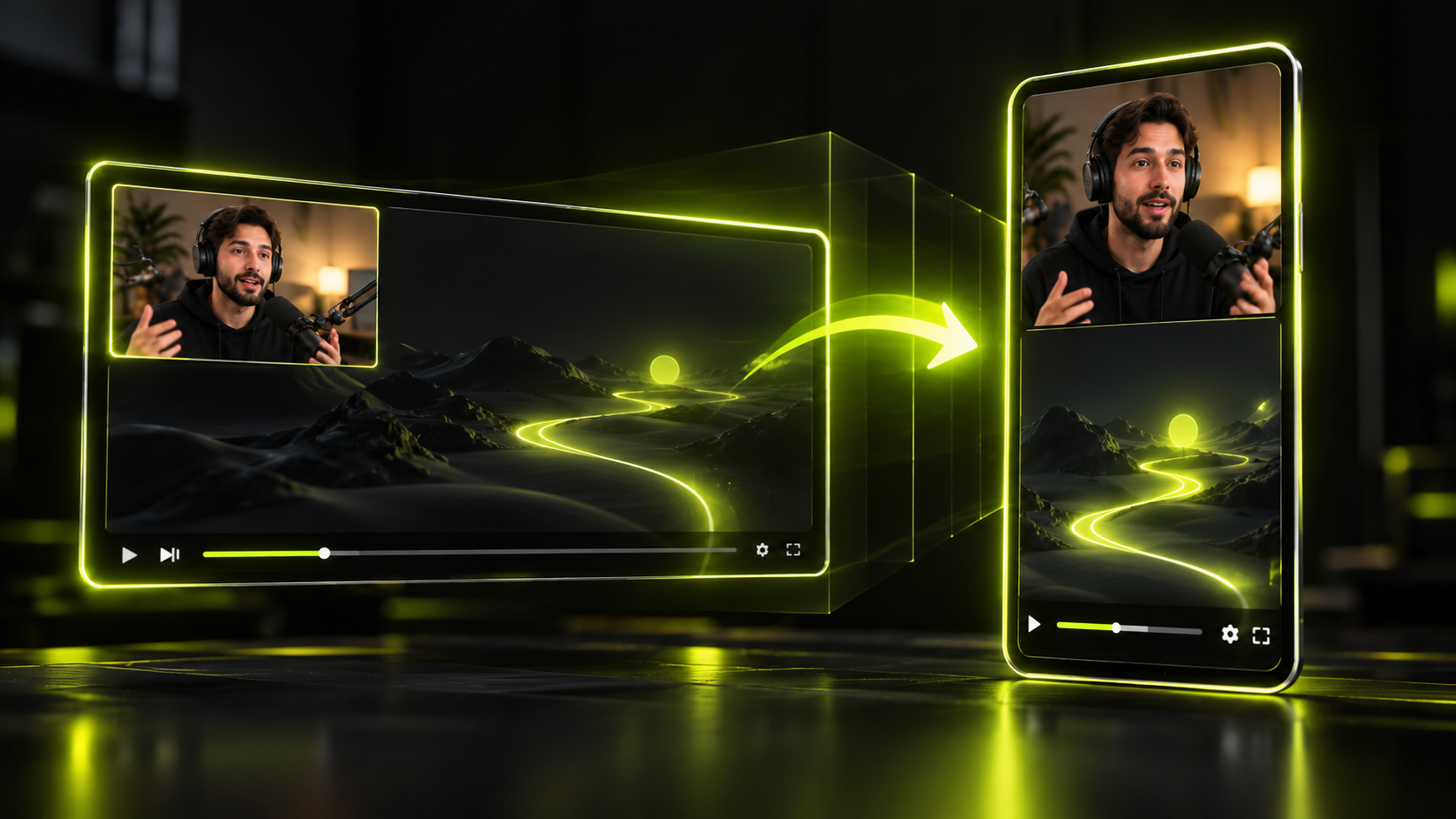
YouTube has confirmed a short list of facts about how Shorts get recommended. The feed is personalized to each viewer, there's no ideal length, and one weak Short doesn't penalize your channel. Most other claims you'll read, like peak posting hours or a magic retention percentage, have no YouTube source behind them.
Below, each claim links to the YouTube Help page, blog post or news report behind it. Older statements carry their date, because a few of them have since changed.
The short version
- The Shorts feed is "personalized to reflect what we think you want to see next," using signals like watch history, likes and "Not interested."
- YouTube says there's no universal ideal length, and one underperforming video doesn't penalize a channel overall.
- YouTube's Shorts lead said in 2023 that posting time isn't a factor (except for news) and that deleting and reposting may look like spam.
- Shorts views have counted every start or replay since March 31, 2025. Since August 24, 2026, that rule covers all formats. Engaged views still show who stayed.
- Reports say a change from October 1, 2026 cuts reach for Shorts re-uploaded from other creators.
- Benchmarks like "75% viewed" have no official source. Compare each Short against your own past Shorts instead.
What YouTube has confirmed about the Shorts algorithm
YouTube doesn't publish ranking weights for Shorts. It has published a handful of Help Center pages, official blog posts and a 2023 Q&A with its Shorts lead. Read together, they answer more questions than you might expect.
The Shorts feed is personalized to each viewer
YouTube's Help page on the Shorts feed says the feed is "personalized to reflect what we think you want to see next." It lists general signals that shape what each viewer sees.
- Watch history and search history
- Subscriptions
- Likes and dislikes
- "Not interested" and "Don't recommend channel" feedback
- Viewer surveys
The page is just as useful for what it leaves out. It gives no Shorts-specific weights for these signals. It also says nothing about hashtags, posting time, reposting or video length. Treat any guide that ranks Shorts signals by importance as an educated guess, however confident it sounds.
A new Short starts with a small test audience
YouTube's Shorts lead said in 2023 that a new Short is first shown to a seed audience. Todd Sherman made the comments in a Creator Insider Q&A, which TechCrunch covered in August 2023.
Search Engine Journal's write-up quoted him describing early views as "exploratory." His summary line was "don't think algorithm, think audience."
In practice, read a Short's first numbers as a test result, not a final verdict. A slow start tells you how one early group responded. It doesn't tell you the ceiling.
There's no ideal Short length
YouTube's Help page on Shorts performance questions says there's "no universal 'ideal' length." YouTube's Shorts lead said the same in 2023.
Length limits did change. YouTube's October 2024 post, Tall updates coming to Shorts, let creators "upload Shorts up to 3 minutes long." That applies from October 15, 2024, for square or taller videos. The same post said recommendations for longer Shorts would improve.
So a longer Short isn't automatically better or worse. Cut each clip where its point lands, and let the content set the length.
One weak Short doesn't sink your channel
The same Help page is direct about flops: "An individual video's underperformance does not penalize a channel overall." That's a relief if you post often and some Shorts miss.
There's one caveat. YouTube notes that repeated viewer drop-off can hurt over time. A single miss is fine. A long pattern of Shorts that viewers leave early is a signal worth acting on.
The page covers two related worries too:
- Making a Short unlisted and then public shouldn't significantly matter.
- Posting other formats "will not inherently confuse the algorithm."
YouTube says Shorts don't hurt long-form
YouTube's May 2025 post, Debunking common myths about YouTube Shorts, addressed this head on. YouTube wrote: "we haven't seen evidence of Shorts negatively impacting long-form performance."
The post also said Shorts can help channels reach "new and diverse viewers." On music, it called trending sounds "not essential." You can use a trending sound when it fits, but you don't need one to be recommended.
If you're using clips to grow a channel, our playbook for growing followers with clips covers the full path from Short to subscriber.
How views are counted now
View counting has changed since 2023. Back then, YouTube's Shorts lead said a view had to pass a "meaningful threshold" that YouTube didn't publish.
Shorts switched to counting every start or replay on March 31, 2025 (YouTube Help). Since August 24, 2026, that rule covers all formats (YouTube Help). In YouTube's words, "views are counted the moment a video starts to play across all formats."
Engaged views are the stricter count. They cover viewers who "stayed to watch past the initial seconds, not including any loops." Your view count now includes people who swiped straight past. Engaged views tell you how many actually stayed.
The October 1, 2026 originality update
Social Media Today reports that YouTube changed Shorts recommendations on October 1, 2026. PPC Land covered the same change.
According to that coverage, the update reduces Shorts reach for content re-uploaded from other creators. The stated target is channels "primarily aggregating" other people's videos. The coverage adds a few details:
- Minor technical edits or template edits don't count as added value.
- Reach is re-evaluated if a channel shifts toward original work.
- No monetization change is described.
These details come from news reports, not from a YouTube Help page in our sources. The reports also don't say clips of your own long videos are exempt, so don't assume they are.
If you clip other creators, the practical answer is the same as before: get permission or join a clipping program, and add real editorial value. Our guide to YouTube's inauthentic and reused content rules covers where the lines sit.
Confirmed by YouTube vs myth or observation
Here are 10 popular claims checked against what YouTube has actually said. "Creator observation" means a pattern people report from their own channels. It can be true for them without being a platform rule.
| Popular claim | What YouTube has said | Source and date | Verdict |
|---|---|---|---|
| Post at peak hours to get pushed | Time of day isn't a factor, except for news | Shorts lead via TechCrunch, Aug 25, 2023 | Myth (2023 statement) |
| Posting more Shorts boosts reach | Posting more doesn't help; quality beats quantity | Shorts lead via TechCrunch, Aug 25, 2023 | Myth (2023 statement) |
| Delete and repost a flop for a fresh start | Deleting and reposting may look like spam | Shorts lead via TechCrunch, Aug 25, 2023 | Myth (2023 statement) |
| Hashtags boost ranking | Over 60 hashtags and all are ignored; nothing says they affect recommendations | YouTube Help on hashtags, retrieved Oct 18, 2026 | Unconfirmed |
| Shorts hurt your long-form videos | No evidence of harm; other formats won't inherently confuse the algorithm | YouTube Blog, May 6, 2025; YouTube Help | Myth |
| You need trending audio | Trending sounds are "not essential" | YouTube Blog, May 6, 2025 | Myth |
| Longer Shorts win | No universal ideal length; Shorts can run up to 3 minutes | YouTube Help; YouTube Blog, Oct 3, 2024 | Myth |
| 75% viewed is the benchmark to hit | YouTube publishes no viewed vs swiped away benchmark | No official source | Creator observation |
| One flop drags the whole channel down | One video's underperformance doesn't penalize a channel overall | YouTube Help, retrieved Oct 18, 2026 | Myth, with a caveat on repeated drop-off |
| Custom thumbnails matter in the Shorts feed | No YouTube statement found in our sources | No official source | Unconfirmed |
Hashtags deserve a closer look. YouTube's Help page on hashtags says that with "more than 60 hashtags, we'll ignore each hashtag." Up to 3 hashtags can show above your title. YouTube's Shorts lead said in 2023 that hashtags can be useful but are hard to generalize about.
That's a limit on spam, not a ranking boost. Use a few relevant hashtags if they describe the Short well. Don't expect them to do the work of a strong opening.
What to actually do with your next Short
Every confirmed fact above points at the same place: whether viewers want to keep watching. You can't tune hidden weights. You can make Shorts that people choose to stay with.
Win the opening seconds
Engaged views and viewed vs swiped away both measure whether people stay past the start. The opening is where your effort pays off most. Our guide to hooking viewers in the first three seconds goes deeper.
Start on the line that makes someone curious, not the setup before it. Cut throat-clearing, intros and "so, anyway" from the front of the clip.
Here's an illustration, not a real quote. A podcast clip that opens on "So, um, I've been thinking about pricing lately" loses the moment. Starting it on "We doubled our price and nobody left" gives viewers a reason to stay.
If you clip long videos, Hookspring gives each clip a hook score with a plain-English reason, based on its opening 1 to 3 seconds. Treat it as a way to rank your candidates before posting, not as a prediction of YouTube's behavior.
Read viewed vs swiped away
YouTube Studio's Shorts analytics show the "percentage of times that viewers viewed your Shorts versus swiped away." That's how YouTube Help on Shorts analytics defines it.
YouTube doesn't publish a target number. Compare each Short against your own recent Shorts instead. If one does clearly worse, look at its first seconds before anything else. Our guide to reading viewed vs swiped away in YouTube Studio walks through the numbers.
Add a related video link
YouTube lets you attach a related video link to a Short. It shows as a clickable link under your handle and points to one of your own uploads.
A few conditions apply:
- The linked video must be your own, and public or unlisted.
- Your channel needs advanced feature access.
- You set it in YouTube Studio → Content → the Short.
This is the clean way to send a Shorts viewer to the full episode or tutorial the clip came from.
Leave a flop up and learn from it
Don't delete and repost a Short that underperformed. YouTube's Shorts lead said in 2023 that deleting and reposting may look like spam. YouTube's Help page also says one weak video doesn't penalize your channel overall.
Instead, compare the flop with your better Shorts. Did it open slower? Did the topic suit your audience? Put that lesson into the next one.
Post at a pace you can keep
YouTube's Shorts lead said in 2023 that posting more doesn't help by itself. Quality matters more than volume. A steady pace you can sustain beats a burst followed by silence.
For a cadence that fits your schedule, see our guide on how often to post Shorts.
What to do with all this
YouTube has said more about Shorts than most guides admit, and it keeps pointing to viewer response. Personalized signals decide who sees a Short. YouTube's Shorts lead said in 2023 that a first test audience shapes the early numbers. Retention on the opening is the part you control.
Ignore rules with no source behind them, like fixed posting hours or a universal retention target. Focus on stronger openings, honest analytics reads and a pace you can keep. When you clip other creators, get permission and add real value.
FAQ
How does the YouTube Shorts algorithm work?
YouTube says the Shorts feed is personalized to each viewer. It uses signals like watch and search history, subscriptions, likes, dislikes and "Not interested" feedback. YouTube's Shorts lead said in 2023 that new Shorts start with a seed audience. YouTube doesn't publish how much each signal weighs.
Do hashtags help Shorts get views?
YouTube hasn't said hashtags affect Shorts recommendations. Its Help page says it ignores every hashtag on a video with more than 60, and shows up to 3 above the title. YouTube's Shorts lead said in 2023 that hashtags can be useful but are hard to generalize about.
What's the best time to post YouTube Shorts?
YouTube's Shorts lead said in 2023 that time of day isn't a factor, with news as the exception. The current Shorts feed Help page doesn't mention posting time at all. Post when it suits your workflow, and keep the schedule steady.
Why do my Shorts get views and then stop?
YouTube hasn't explained specific stalls. YouTube's Shorts lead said in 2023 that early views are "exploratory," so early numbers reflect a test audience. YouTube's Help page adds that repeated viewer drop-off can hurt over time. Check viewed vs swiped away to see whether viewers stayed past the opening.
Should I delete and repost a Short that flopped?
No. YouTube's Shorts lead said in 2023 that deleting and reposting may look like spam. YouTube's Help page also says one underperforming video doesn't penalize your channel overall. Leave it up, learn why it missed, and apply that to your next Short.
Written and maintained by the Hookspring team. Spot an error or something out of date? Email hello@hookspring.com.
Sources
- The Shorts feed, YouTube Help, retrieved 2026-10-18
- Shorts performance questions, YouTube Help, retrieved 2026-10-18
- Debunking common myths about YouTube Shorts, YouTube Official Blog, retrieved 2026-10-18
- Tall updates coming to Shorts, YouTube Official Blog, retrieved 2026-10-18
- Hashtags on YouTube, YouTube Help, retrieved 2026-10-18
- YouTube demystifies the Shorts algorithm, views and answers other creator questions, TechCrunch, retrieved 2026-10-18
- YouTube explains how Shorts algorithm works, Search Engine Journal, retrieved 2026-10-18
- How Shorts views are counted, YouTube Help, retrieved 2026-10-18
- Engaged views, YouTube Help, retrieved 2026-10-18
- YouTube Shorts analytics, YouTube Help, retrieved 2026-10-18
- Related video links in Shorts, YouTube Help, retrieved 2026-10-18
- YouTube updates Shorts algorithm to put more focus on original content, Social Media Today, retrieved 2026-10-18
- Re-uploaded Shorts lose reach as YouTube favours original clips, PPC Land, retrieved 2026-10-18